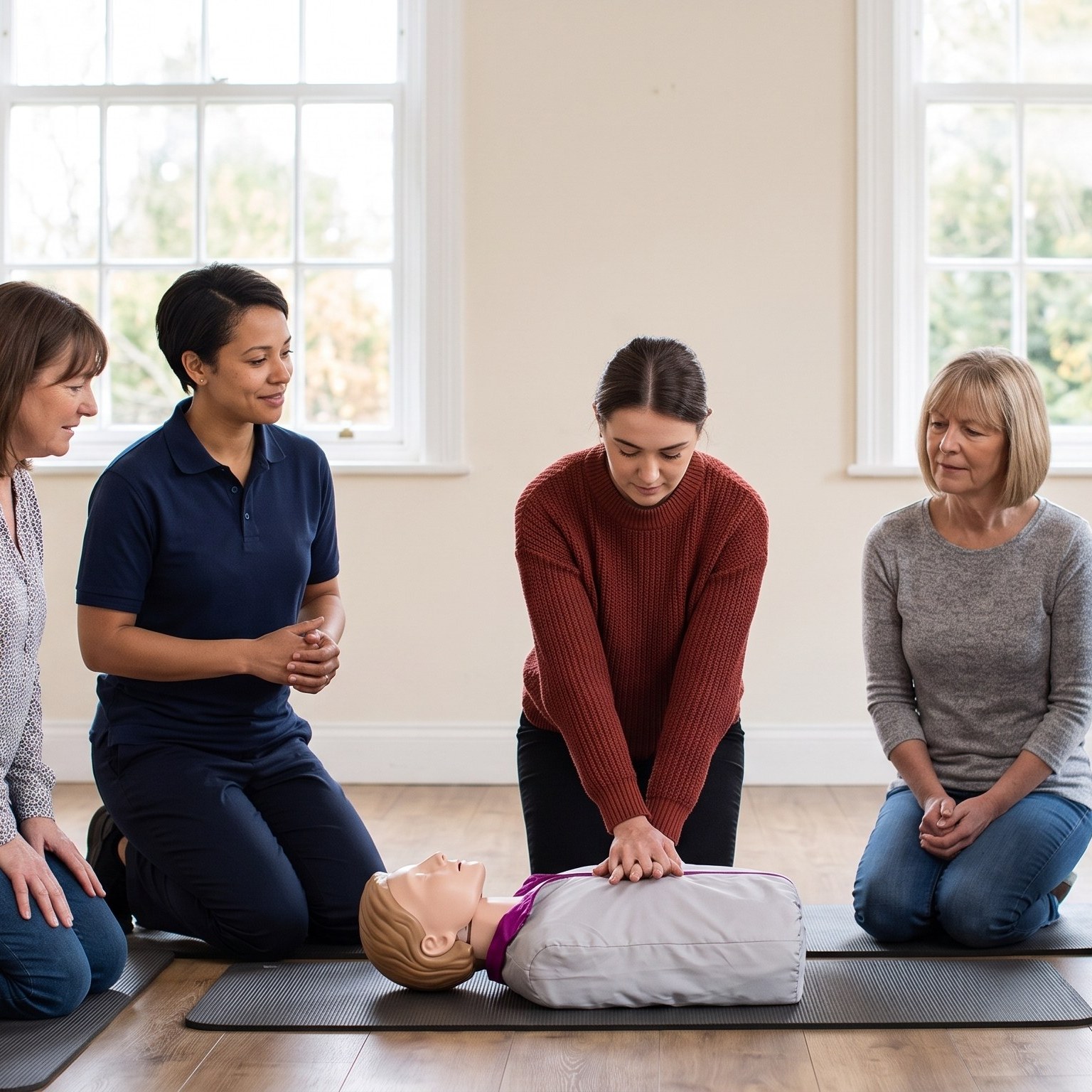
Restart a Heart Day was on Friday 16 October. Up and down the country, people spent part of the day practising CPR, many of them for the first time. If you were one of them, this is a good week to go over the steps again while they are fresh. If you weren't, this article is for you too.
When someone suddenly collapses, the first few minutes matter most. You do not need to be a doctor or a nurse to help. You need to know a handful of simple steps, and to be willing to start. The steps below follow the Resuscitation Council UK (RCUK) Guidelines 2025, which are the current guidance in the UK.
Before you go to the person, take a second to look around. Is there traffic, fire, electricity or anything else that could hurt you? You cannot help anyone if you become a casualty yourself. If the area is safe, go to them.
Kneel beside them, gently shake their shoulders and ask loudly, "Are you all right?" If they answer, move or open their eyes, they are responsive. Stay with them, find out what has happened and get help if they need it.
If they do not respond, call 999 now, or ask someone nearby to do it. RCUK's 2025 guidance is clear on this: call for anyone who is unresponsive, before you have finished checking their breathing.
Put the phone on speaker and keep it next to you. The call handler will stay on the line, ask you simple questions and talk you through what to do. If you are not sure whether someone is breathing normally, they will help you decide.
If there is anyone else around, ask them to find a defibrillator (an AED) and bring it to you. Many workplaces, shops and community buildings have one. The 999 call handler can tell you where the nearest registered public defibrillator is.
Open the airway by gently tilting their head back and lifting the chin. Then look, listen and feel for normal breathing for no more than 10 seconds.
Watch out for gasping. In the first minutes after the heart stops, some people take slow, noisy, irregular breaths. This is not normal breathing. If someone is unresponsive and gasping, or not breathing normally, treat it as cardiac arrest and start CPR.
This is the part that keeps blood moving to the brain until help arrives.
If you have been trained in rescue breaths and are willing to give them, give 2 breaths after every 30 compressions. If you have not, or you would rather not, keep going with continuous chest compressions. Doing compressions is far better than doing nothing while you worry about the breaths.
It is hard work. If someone else is there, swap over about every two minutes, with as short a pause as you can manage.
When the defibrillator arrives, switch it on and follow its spoken instructions. It will tell you where to put the pads and will only advise a shock if one is needed. Keep compressions going whenever it tells you to.
Carry on with CPR until a paramedic takes over, the person starts to wake up, moves, opens their eyes and breathes normally, or you are too exhausted to continue.
If they are breathing normally but not responding, and you do not think they have been injured, put them in the recovery position and keep checking their breathing. If you think they may have been injured, for example after a fall, or if their breathing is not normal, do not use the recovery position. If their breathing stops or becomes abnormal, start CPR again.
Most people who freeze in an emergency are not short of courage. They are unsure what to do first. Practising on a manikin, with a trainer watching your hand position, depth and speed, turns a list of steps into something your body remembers. It also helps you get past the worry about doing it wrong.
No. If you have not been trained, or you are not comfortable giving them, do continuous chest compressions. The 999 call handler will guide you.
Call 999 on speaker, then start compressions straight away. Tell the call handler you are alone and follow their instructions.
If someone is unresponsive and not breathing normally, start CPR. You will not be on your own: the call handler will help you decide and talk you through each step.
Reading the steps helps. Practising them is what builds confidence. CPR is a core part of our one-day Emergency First Aid at Work course, alongside choking, bleeding and the recovery position, with plenty of hands-on practice. If you would like to brush up first, our earlier post on CPR tips for Heart Month covers the basics too.
