.png)
February marks Heart Month 2026, a crucial time to shine a spotlight on cardiovascular health and the life-saving skill that could help you save someone experiencing a cardiac arrest -CPR.
Every year in the UK, around 30,000 cardiac arrests occur outside of hospital settings. The sobering reality? Fewer than one in ten people survive. But here's the thing, immediate CPR can double or even triple a person's chance of survival. That's huge. And it's exactly why this Heart Month, we're breaking down the vital CPR tips everyone should know.
When someone's heart stops beating, blood stops flowing to the brain and other vital organs. Brain damage can begin within just 3-4 minutes without oxygen, and death can occur within 8-10 minutes. That's an incredibly narrow window.
The average ambulance response time in the UK is around 7-8 minutes for life-threatening emergencies. While paramedics are incredible at what they do, they can't teleport to the scene. This is where you come in. By performing CPR immediately, you're manually pumping blood around the body, buying precious time until professional help arrives.
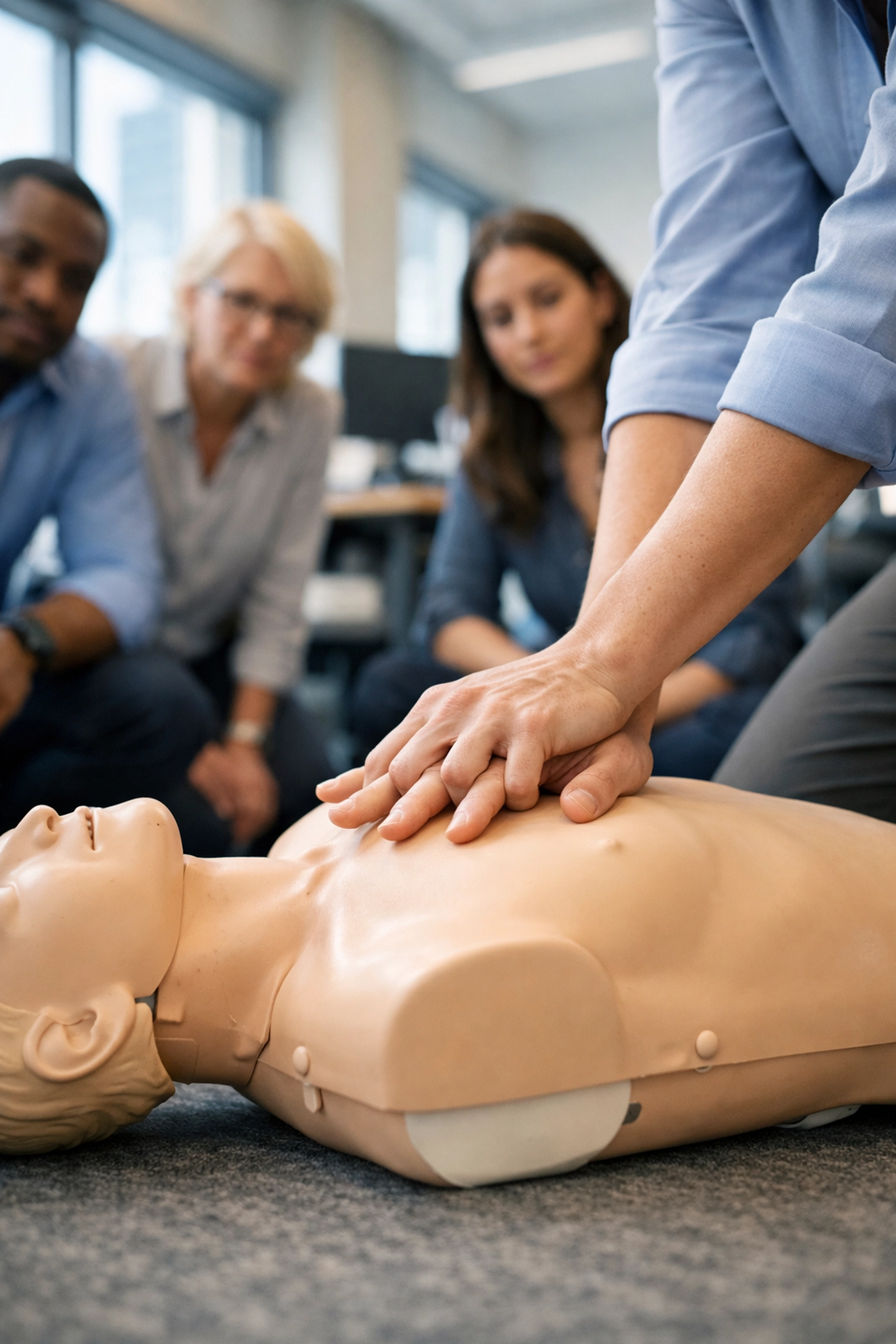
Let's be honest, most people freeze when faced with a medical emergency. There's a fear of doing something wrong, making things worse, or being held responsible if the outcome isn't positive. These fears are completely understandable, but they shouldn't stop you from acting.
Here's the reassuring truth: you cannot make a cardiac arrest worse by performing CPR. If someone is unresponsive and not breathing normally, their heart has already stopped working properly. Doing nothing is the worst option. The law protects good Samaritans in the UK, and any attempt to help is far better than standing by.
The UK Resuscitation Council provides clear, evidence-based guidelines that are regularly updated. Here's what you need to do if you encounter someone who's collapsed and unresponsive:
Before rushing in, quickly assess the scene. Is it safe for you to approach? If there's immediate danger (fire, traffic, hazardous materials), don't put yourself at risk.
Gently shake the person's shoulders and shout, "Are you alright?" Look for any signs of response, movement, groaning, eye-opening.
Tilt the person's head back gently and lift their chin. Look, listen, and feel for normal breathing for no more than 10 seconds. Occasional gasps don't count as normal breathing, this is called agonal breathing and requires immediate CPR.
If you're alone, call 999 yourself and put the phone on speaker. If others are around, direct someone specific: "You in the blue jacket, call 999 now!" Also ask someone to find a defibrillator (AED) if one is nearby.
Don't delay. Here's how to perform effective chest compressions:
Automated External Defibrillators (AEDs) are designed for the public to use. They provide clear voice instructions and can analyze the heart's rhythm to determine if a shock is needed. Continue CPR while the AED is being set up, and follow its prompts exactly.
For anyone nervous about using an AED, we've written a helpful guide on overcoming AED fear that might put your mind at ease.
If you're trained and confident, the UK Resuscitation Council recommends 30 chest compressions followed by 2 rescue breaths. However, if you're untrained or uncomfortable giving rescue breaths, continuous chest compressions alone are still highly effective and far better than doing nothing.
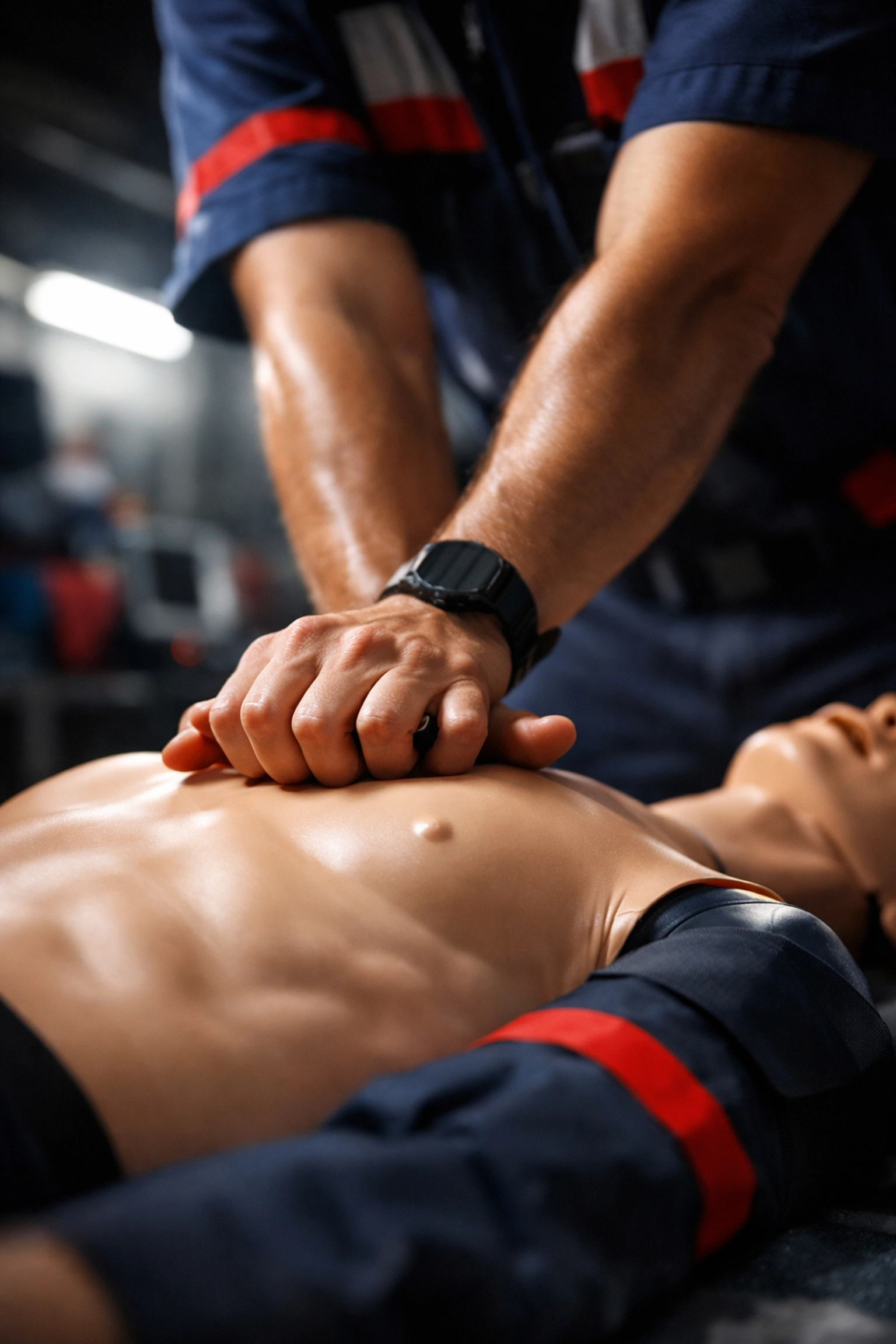
Heart Month 2026 is an ideal time for businesses to evaluate their emergency preparedness. Cardiac arrests don't just happen at home: they occur in workplaces, gyms, shopping centres, and public spaces every day.
Under the Health and Safety (First-Aid) Regulations 1981, employers must provide adequate first aid provisions. While the specifics depend on workplace risks and size, having team members trained in CPR and emergency response is not just good practice: it's often a legal and moral obligation.
Imagine this scenario: a colleague collapses at their desk. Would your team know what to do? Would they feel confident to act? Or would everyone stand frozen, unsure and scared, while precious minutes tick away?
Investing in proper first aid training creates a workplace culture where people feel empowered to respond, not paralyzed by fear.
Reading about CPR online is valuable, but it's no substitute for hands-on training. Proper courses give you the chance to practice on manikins, receive feedback from qualified instructors, and build genuine confidence in your abilities.
At Promet, we deliver accredited first aid training courses across the UK, designed to equip individuals and teams with practical, life-saving skills. Our courses cover:
Our instructors follow UK Resuscitation Council guidelines and create a supportive, pressure-free environment where questions are encouraged and everyone leaves feeling prepared.

Heart Month 2026 reminds us that cardiovascular disease remains the UK's biggest killer, but it's also largely preventable and treatable: especially when people like you are equipped to respond.
Learning CPR isn't about becoming a medical professional. It's about being ready to help when someone needs it most. It's about giving someone a fighting chance while the ambulance is on its way. It's about becoming part of a community of everyday lifesavers.
This February, don't just observe Heart Month: participate in it. Whether you're an individual wanting to learn a vital skill, a manager responsible for your team's safety, or a business owner looking to enhance workplace preparedness, there's no better time to invest in CPR training.
Every person trained in CPR is another potential lifesaver in our communities. You could be standing in a coffee shop, attending a meeting, or walking through a park when someone collapses. In that moment, your knowledge could be the difference between life and death.
Ready to learn CPR and gain the confidence to act in an emergency? Explore our range of first aid courses or get in touch with our team to discuss training options for your workplace.
Because when it comes to cardiac arrest, every second counts, and so do you.
