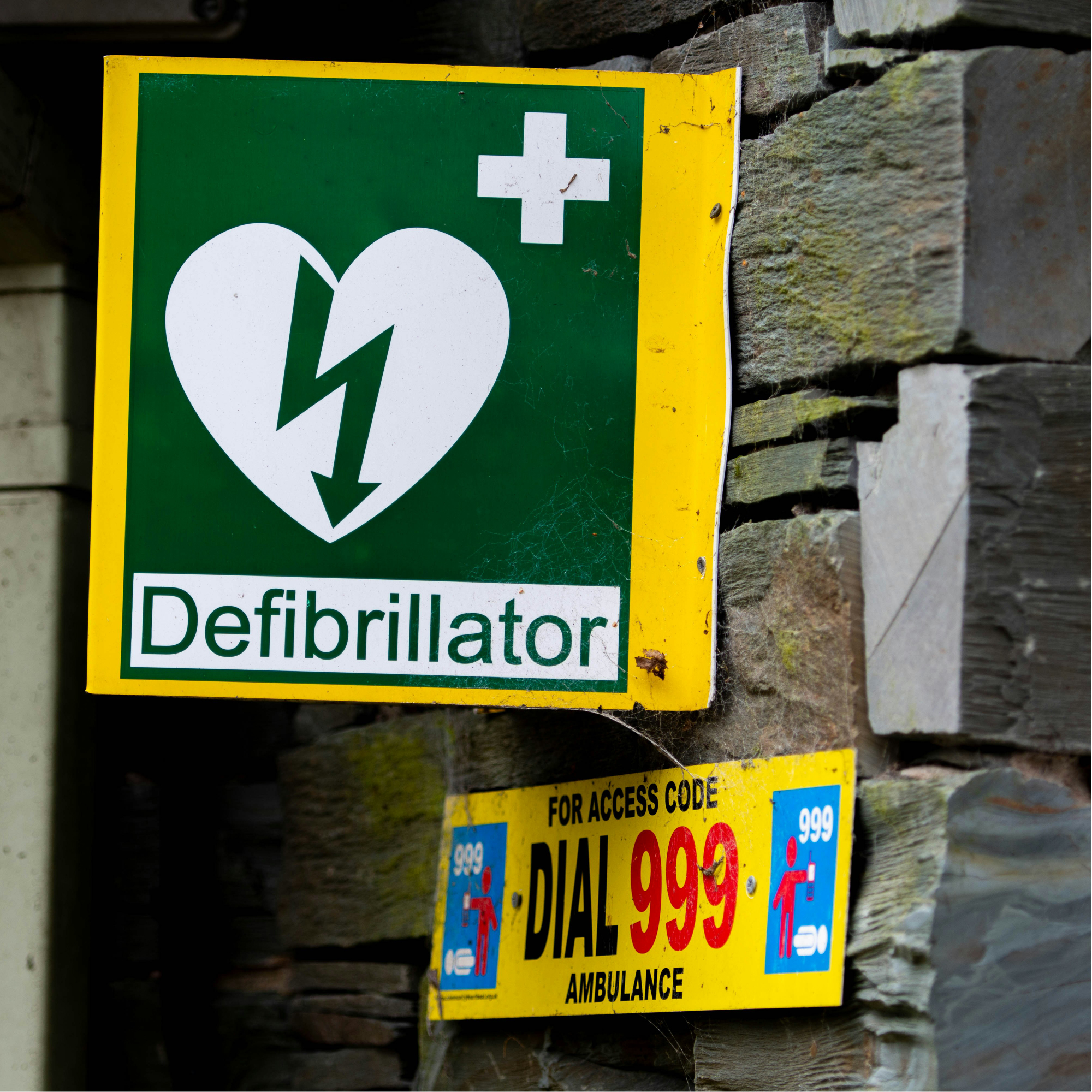
Every minute counts during a sudden cardiac arrest. For each minute that passes without defibrillation, the chance of survival drops by roughly 10%. Yet here's a sobering statistic: 43% of people wouldn't use an AED even if they could identify one.
That's not a knowledge gap. That's a confidence gap.
Your workplace might have a shiny defibrillator mounted on the wall, complete with clear signage and easy access. But if your team is too scared to grab it when someone collapses, it might as well be a decorative plaque.
Let's talk about why that fear exists: and more importantly, how proper training from Promet can turn hesitant bystanders into confident lifesavers.
When someone witnesses a colleague collapse, the brain goes into overdrive. Stress hormones flood the system. Rational thinking takes a back seat. And suddenly, that AED on the wall looks less like a lifesaving tool and more like a terrifying piece of equipment you've never properly used.
This isn't weakness: it's human nature.
Research shows that unfamiliarity with AED devices causes significant delays in emergency response. Participants using unfamiliar defibrillator models took 7 seconds longer to deliver a shock compared to those who'd trained on the same device. Seven seconds might not sound like much, but in cardiac arrest, it could mean the difference between recovery and tragedy.
The fear isn't irrational. It stems from genuine concerns that, without proper education, can paralyse even the most well-meaning responder.
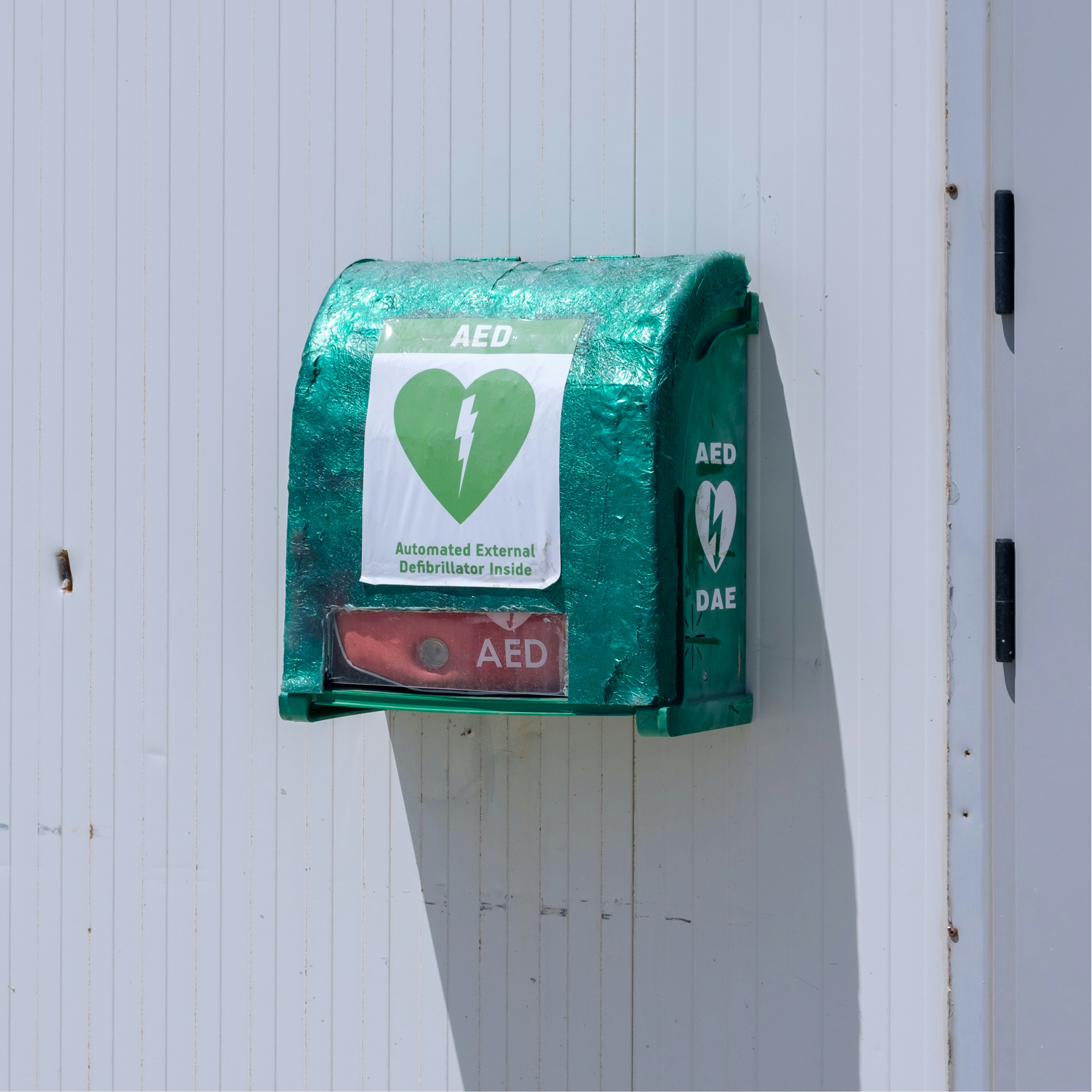
Let's address the elephants in the room: the misconceptions that stop people from reaching for that AED.
This is the big one. People imagine accidentally delivering an electric shock to someone who's just fainted or having a panic attack.
The reality? Modern AEDs are remarkably intelligent. They analyse the heart rhythm automatically and will only allow a shock if the person is in a shockable cardiac rhythm. You literally cannot shock someone who doesn't need it: the device won't let you. Press the button all you want; if the heart doesn't require defibrillation, nothing happens.
Here's the uncomfortable truth: if someone is in cardiac arrest, they're already in the worst possible situation. They're clinically dead. An AED cannot make a cardiac arrest victim's condition worse: it can only help.
The only way to truly make things worse? Doing nothing.
Legal liability concerns rank highly among reasons people hesitate to help. UK common law and legal practice generally protect bystanders who act reasonably and in good faith. The Social Action, Responsibility and Heroism (SARAH) Act 2015 also instructs courts to consider whether someone was acting responsibly or heroically when deciding negligence claims , which provides additional reassurance
In the UK, there has been no successful case against anyone who tried to provide first aid to a personin difficulty. The courts have looked favourably on those who try to help others. The real legal risk? Organisations that fail to provide adequate first aid provisions for their workforce.
AEDs are specifically designed for use by laypeople. They provide clear voice prompts, visual instructions, and step-by-step guidance. You don't need a medical degree: you need confidence and basic familiarity with the device.
That said, confidence doesn't appear from nowhere. It's built through training.
Average ambulance response times in the UK hover around 8-9 minutes for life-threatening emergencies. Sometimes longer. Brain damage begins after just 4 minutes without oxygen.
The maths doesn't work. Bystander intervention isn't optional: it's essential.
Here's what the research tells us: when people train on AED devices, their confidence soars.
Training doesn't just teach you which buttons to press. It rewires your stress response. When you've practised the steps multiple times: opening the case, applying the pads, following the prompts: your brain builds muscle memory. In an emergency, you don't have to think. You just do.
This is why Promet's AED training course focuses heavily on hands-on practice. Reading about defibrillators is one thing. Actually using one (even in a training scenario) is transformative.
So how do you shift your workplace culture from "someone else will handle it" to "I've got this"?
Generic awareness isn't enough. Your team needs structured, accredited training that covers:
Promet's AED course ticks all these boxes, giving your team the knowledge and confidence to respond effectively. For comprehensive coverage, consider pairing it with our broader First Aid courses to build a truly capable response team.
An AED locked away in a cupboard is unlikely to save a life. Devices should be placed in high-traffic, clearly visible locations with clear signage. We recommend positioning the AED near an entrance, so everyone sees it as they come in and knows exactly where it is, not just designated first aiders, but everyone on site.
Talk about your AED in team meetings. Include it in induction processes. Run regular refresher sessions. We can help you put all of this in place, because the more familiar an AED becomes, the less intimidating it feels and the more likely people are to act when it matters.
Skills fade without reinforcement. The HSE recommends annual refresher training for first aid skills, and AED competence is no exception. Regular practice keeps confidence high and response times low.
Create a safe space for people to voice their concerns about using an AED. Many of those concerns will be based on myths we've already debunked. Education is the antidote to anxiety.

When one person in your workplace becomes confident with an AED, something interesting happens. They talk about it. They reassure colleagues. They demonstrate that it's not as scary as it seems.
Confidence is contagious.
A single training session can transform your entire workplace culture around emergency response. Suddenly, that AED on the wall isn't a source of anxiety: it's a source of security. Your team knows it's there, knows how to use it, and knows they can make a difference if the worst happens.
Each year in the UK, ambulance services attempt resuscitation in around 30,000 out-of-hospital cardiac arrests. National survival to hospital discharge remains low. Typically fewer than one in ten patients survive. Early defibrillation, especially within the first few minutes and in shockable rhythms, is known to greatly enhance survival and is associated with much higher chances of a good outcome in selected cases.
The technology exists. The devices are in place. The only missing ingredient is confidence.
Promet's accredited AED training is designed specifically to bridge that gap. We don't just teach your team how to use a defibrillator: we give them the confidence to actually do it when it matters most.
Because a defibrillator on the wall is just a box. A defibrillator in confident hands? That's a lifeline.
Ready to transform your team's emergency response capabilities? Explore our AED and First Aid courses or get in touch to discuss training options for your organisation.
